Home › Lessons › Tarraxo and feeling

TOCA STUDENT · Lesson 33 · Tarraxo and feeling

Change of levels. The vertical dimension of tarraxo

There is a whole direction you are probably not using, and it costs nothing to learn. Up and down.

Dawou Tarraxo, pioneer of Tarraxo. Change of levels. The vertical dimension of tarraxo

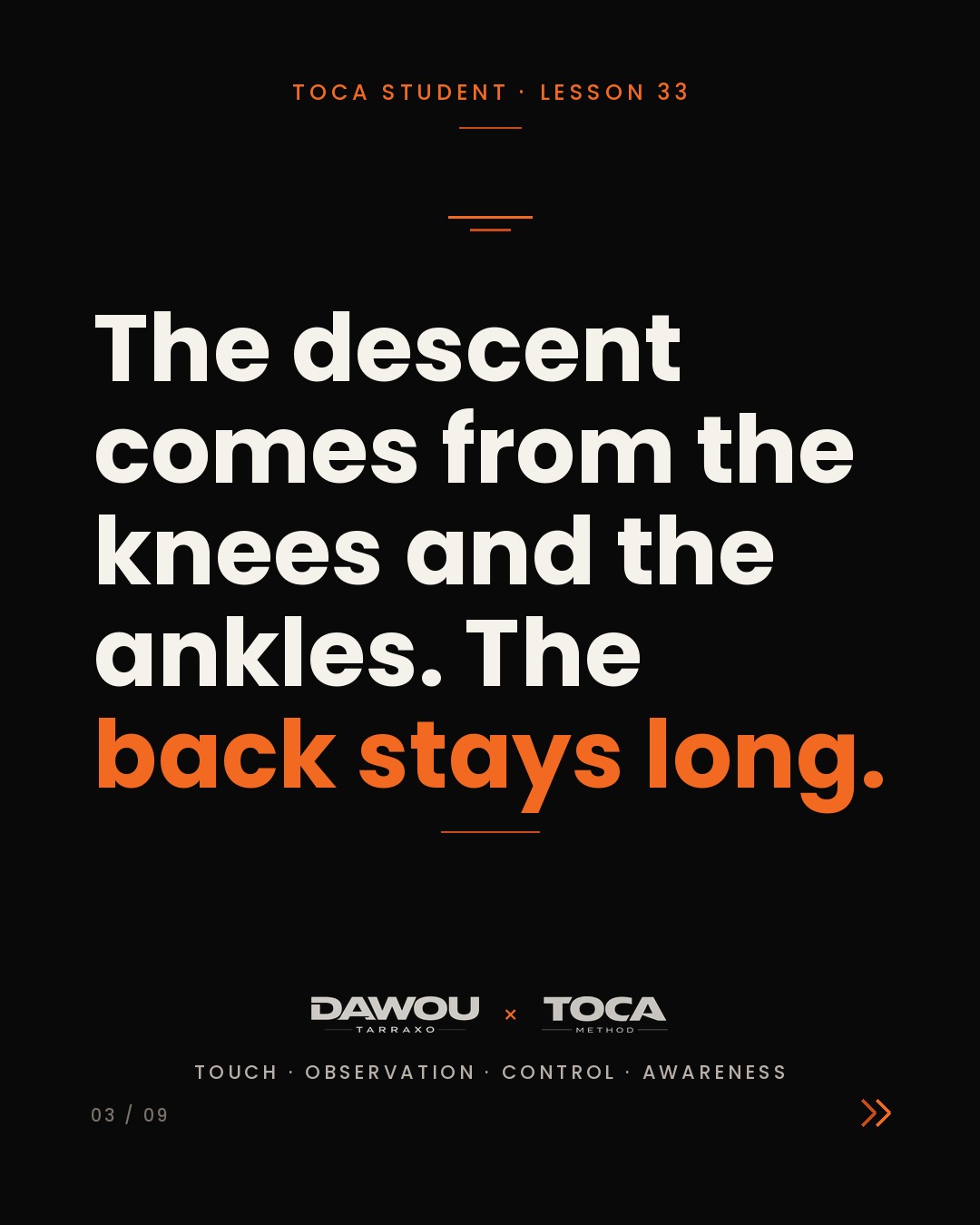
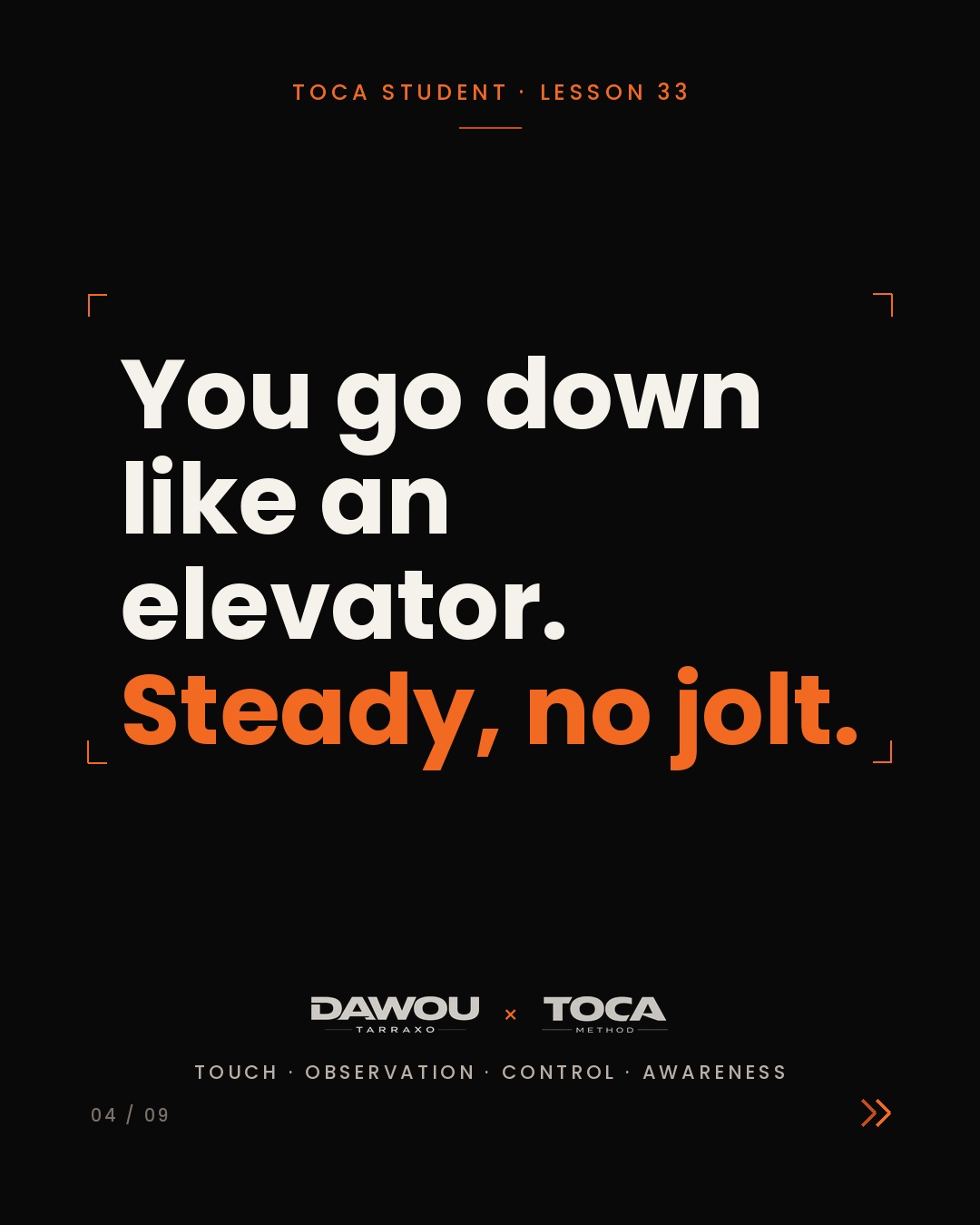
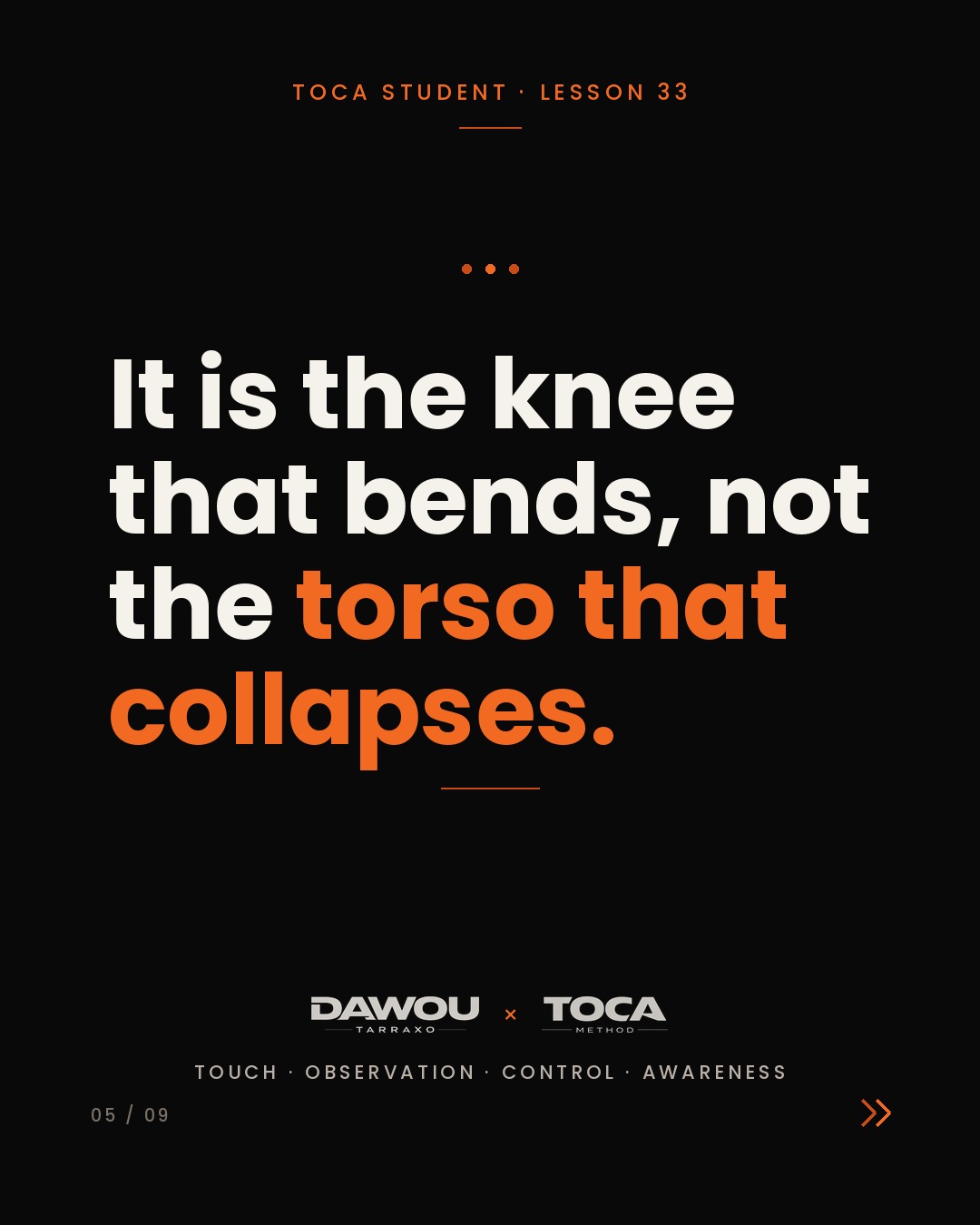
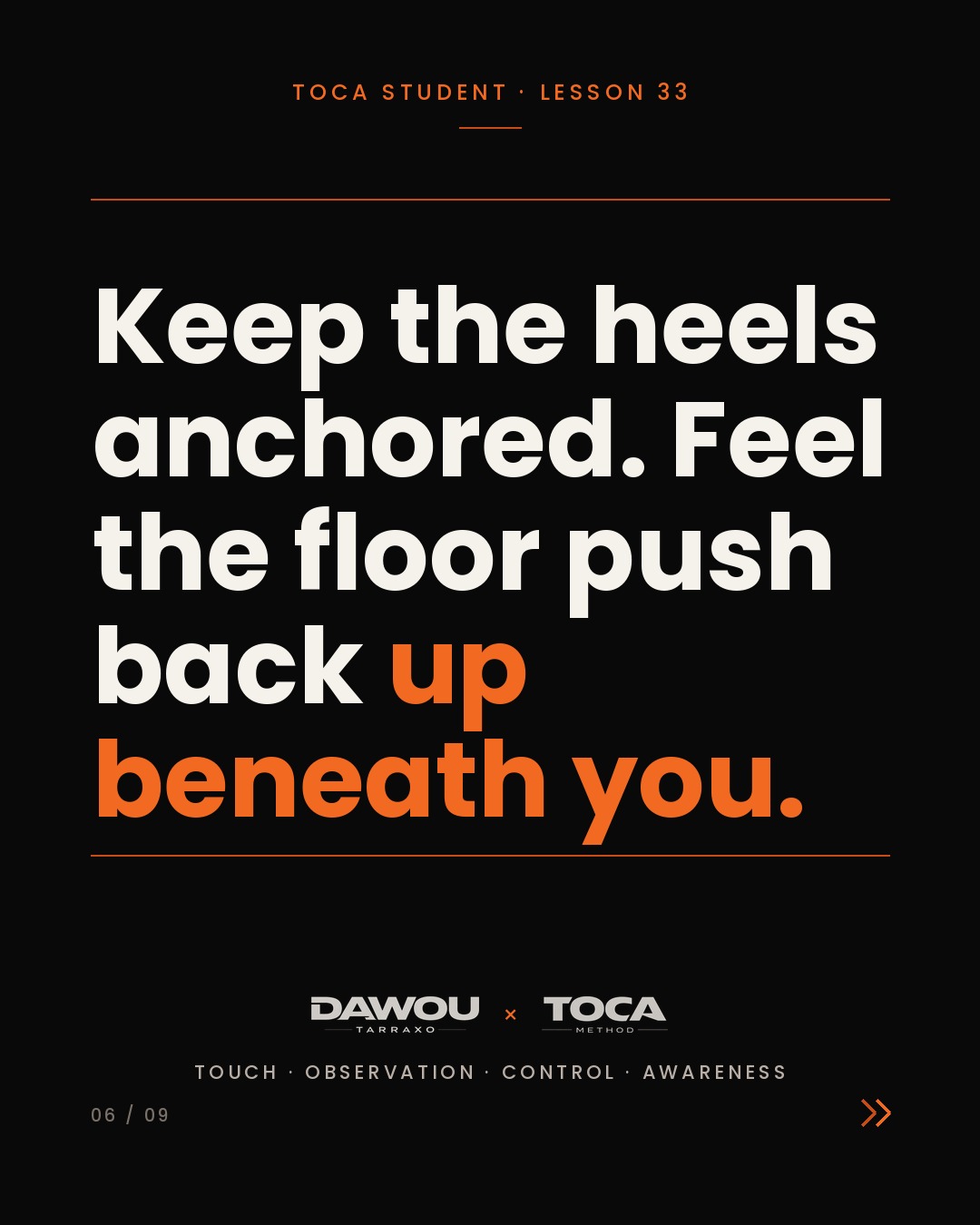
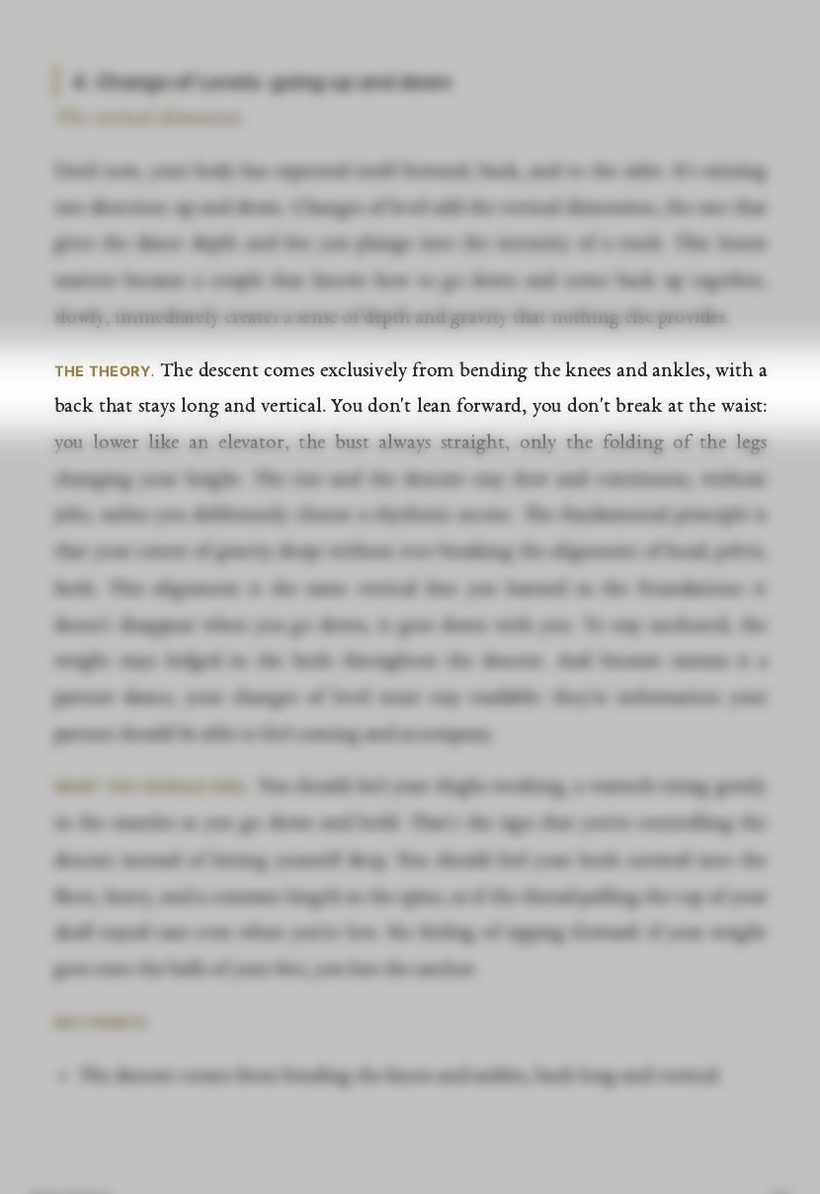
The descent comes from the knees and the ankles, with the back long and vertical. You go down like an elevator, steady, no jolt. It is the knee that bends, not the torso that collapses. Keep the heels anchored and feel the floor push back up beneath you.

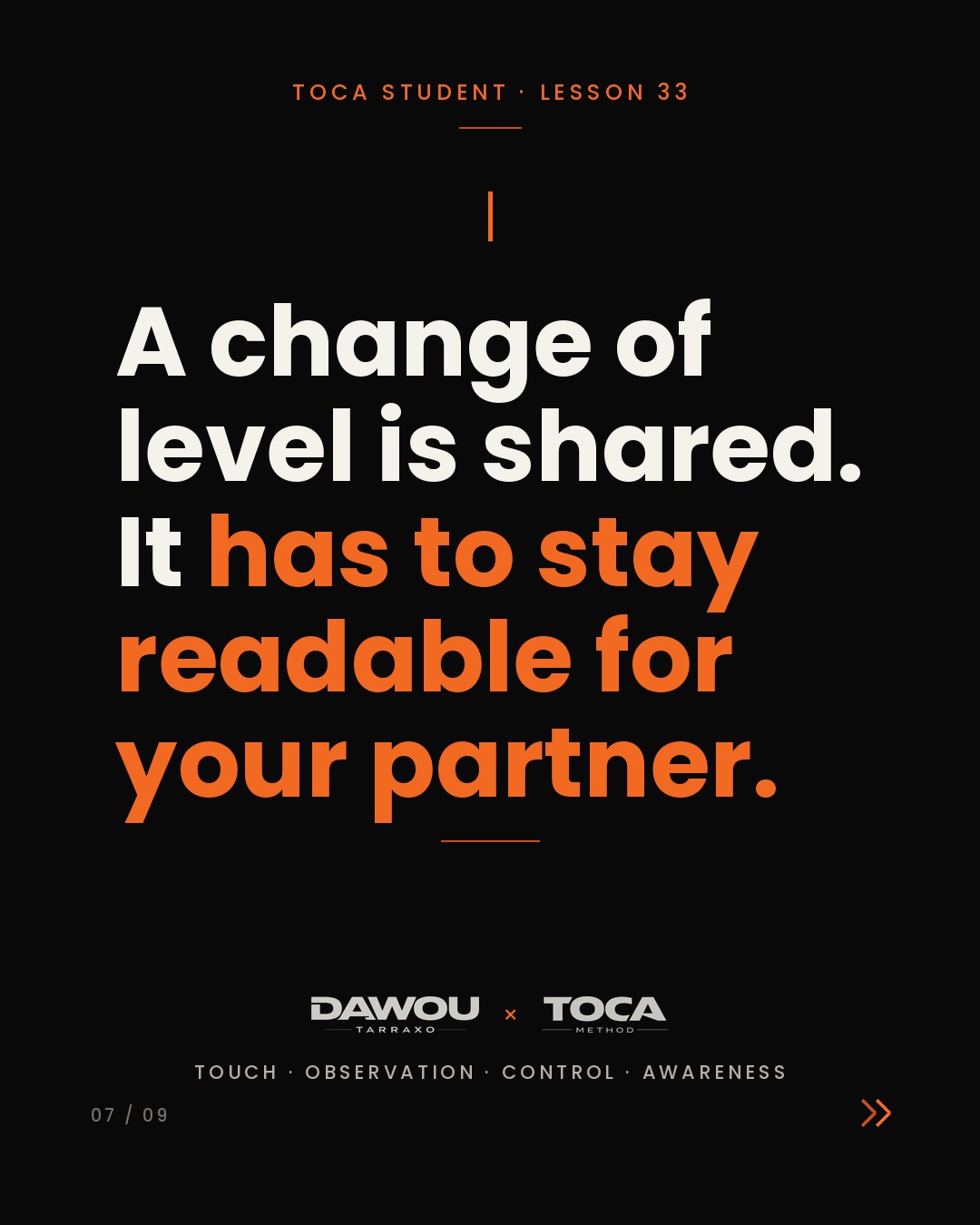
One condition. A change of level is shared, so it has to stay readable for your partner, which means slow and continuous unless the break is a rhythmic choice.

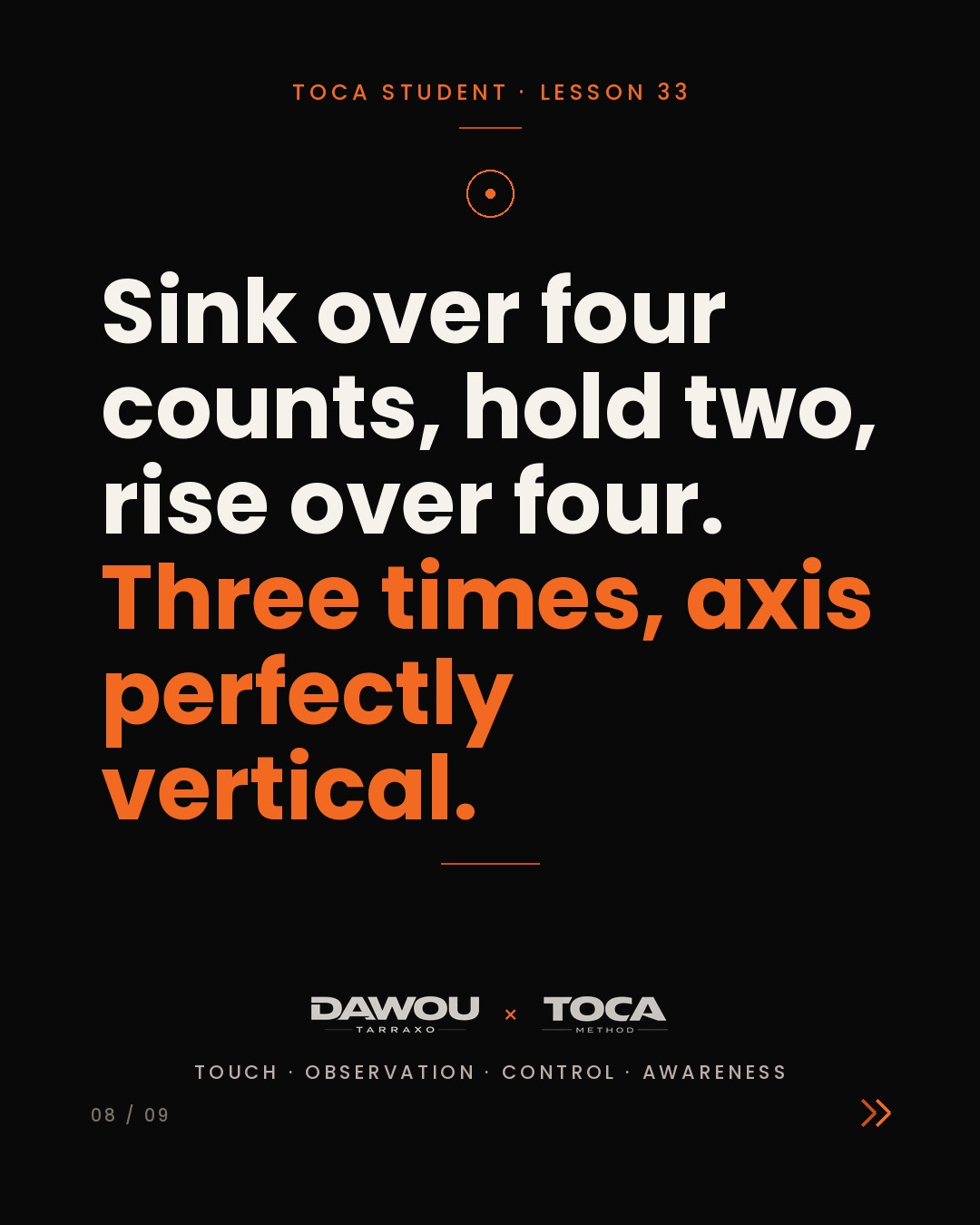
Sink over four counts, hold two, rise over four. Three times, axis perfectly vertical.

Rise and sink gives tarraxo a direction most dancers never use.
Your dance has a vertical dimension, step by step

  1. MOST DANCERS ONLY TRAVEL FORWARD, BACK AND SIDEWAYS.
  2. There is a whole direction you are not using. Up and down.
  3. The descent comes from the knees and the ankles. The back stays long.
  4. You go down like an elevator. Steady, no jolt.
  5. It is the knee that bends, not the torso that collapses.
  6. Keep the heels anchored. Feel the floor push back up beneath you.
  7. A change of level is shared. It has to stay readable for your partner.
When did you last change level on purpose?

The full carousel

This lesson comes from the book

Page 107 of The student's book by Dawou Tarraxo, the TOCA Method page this lesson comes from
The student's book · page 107

The student’s book takes dancers from the first foundations to real feeling. The teacher’s guide gives instructors the structure to pass it on. Both in English, French and Spanish, on Amazon and Apple Books.

The student’s book The teacher’s guide

The method

T O C A

Two bodies. One connection.

TTouchThe connection with your partner. Feeling through contact, never through force.
OObservationListening to your partner’s body, energy and tempo.
CControlMastery of your own movement. Precision without tension.
AAwarenessFull presence: with yourself, your partner and the music.