Every dance breaks. How to recover in the next half second
A movement fails almost always for the same reason, the weight was not clearly placed. So the recovery is always the same too. Return to your axis first, land on a clean support, and only then decide what happens next.
Do not force the figure back. Let it go. A transition is already dance, never a dead beat. Link with the soft, cut with the sharp, both are honest exits.
And look at the cause, not only the repair. Most breaks come from anticipation, you left before the information arrived. If you are not sure, wait a fraction, the information always comes.
Train it on purpose. Break a figure deliberately, and rebuild inside one beat.
Recovering cleanly is a kizomba skill you can train on purpose.
Recovering when the movement breaks, step by step
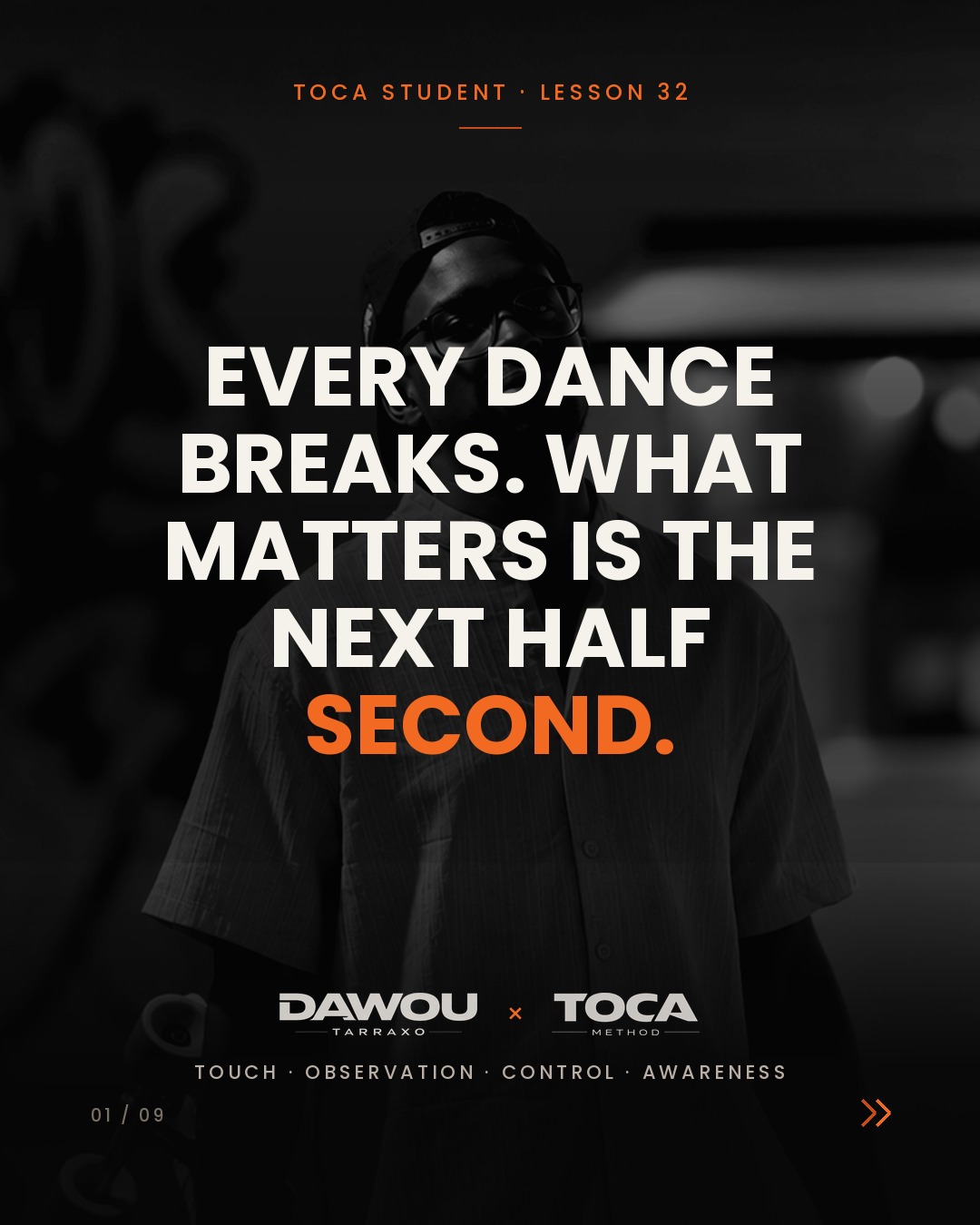
EVERY DANCE BREAKS. WHAT MATTERS IS THE NEXT HALF SECOND.
A movement fails when the weight is not clearly placed. Return to your axis first.
Do not force the figure back. Let it go and land on a clean support.
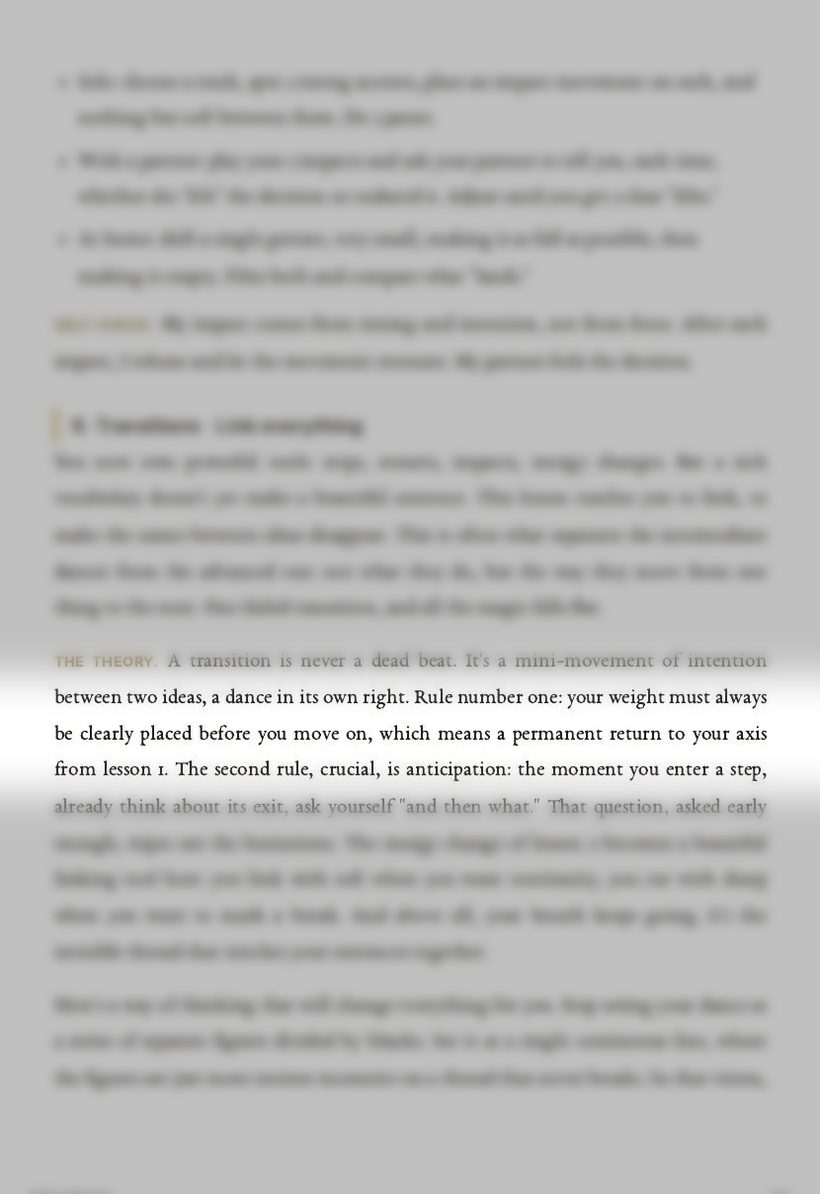
A transition is already dance, never a dead beat.
Link with the soft. Cut with the sharp. Both are honest exits.
Most breaks come from anticipation. You left before the information arrived.
If you are not sure, wait a fraction. The information always comes.
What do you do in the second after it goes wrong?
The full carousel
This lesson comes from the book
The student's book · page 161
The student’s book takes dancers from the first foundations to real
feeling. The teacher’s guide gives instructors the structure to pass it on.
Both in English, French and Spanish, on Amazon and Apple Books.