Undercharging as a dance teacher does not serve your students
Many gifted teachers quietly sabotage themselves around money, out of humility or fear. But a price is not greed, it is a signal and a boundary. It tells the world what your work is worth, it filters for students who value it, and it lets you keep teaching instead of burning out and disappearing.
Structure your offers so they serve different students and protect your time. A drop in, a pack that rewards commitment, privates at a premium that reflects their full attention value, weddings and events priced for the project rather than the hour.
A student on a course improves and stays. A student who only ever drops in tends to drift.
And anchor the price to the value you deliver. You are not selling an hour of your time, you are selling years of accumulated craft delivered in that hour.
Pricing dance classes is a signal, a boundary, and a way to keep teaching.
Pricing is part of your teaching, step by step
UNDERCHARGING DOES NOT SERVE YOUR STUDENTS.
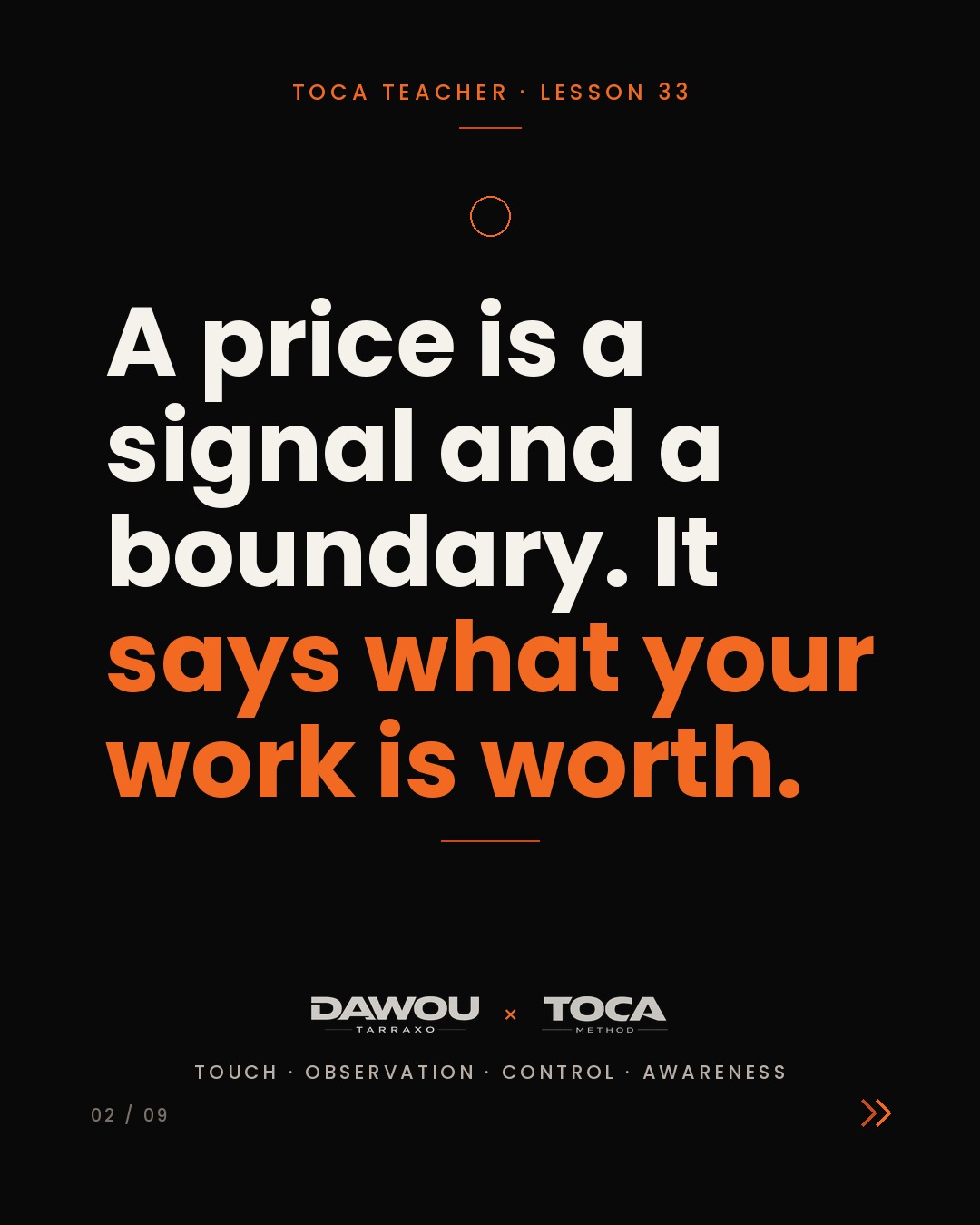
A price is a signal and a boundary. It says what your work is worth.
It filters for students who value it, and it lets you teach without burning out.
Structure offers that serve different students and protect your time.
A drop in, a pack that rewards commitment, privates at a premium, projects priced as projects.
A student on a course improves and stays. A student who only drops in drifts.
You are not selling an hour. You are selling years of craft delivered in that hour.
Does your pricing reflect the progress you actually deliver?
The full carousel
This lesson comes from the book
The teacher's guide · page 431
The student’s book takes dancers from the first foundations to real
feeling. The teacher’s guide gives instructors the structure to pass it on.
Both in English, French and Spanish, on Amazon and Apple Books.