You gain depth and time that a weekly class never gives you. You also gain fatigue, information overload, and a hard limit on how much a body can absorb before it stops learning. Design for the human being, not for the syllabus.
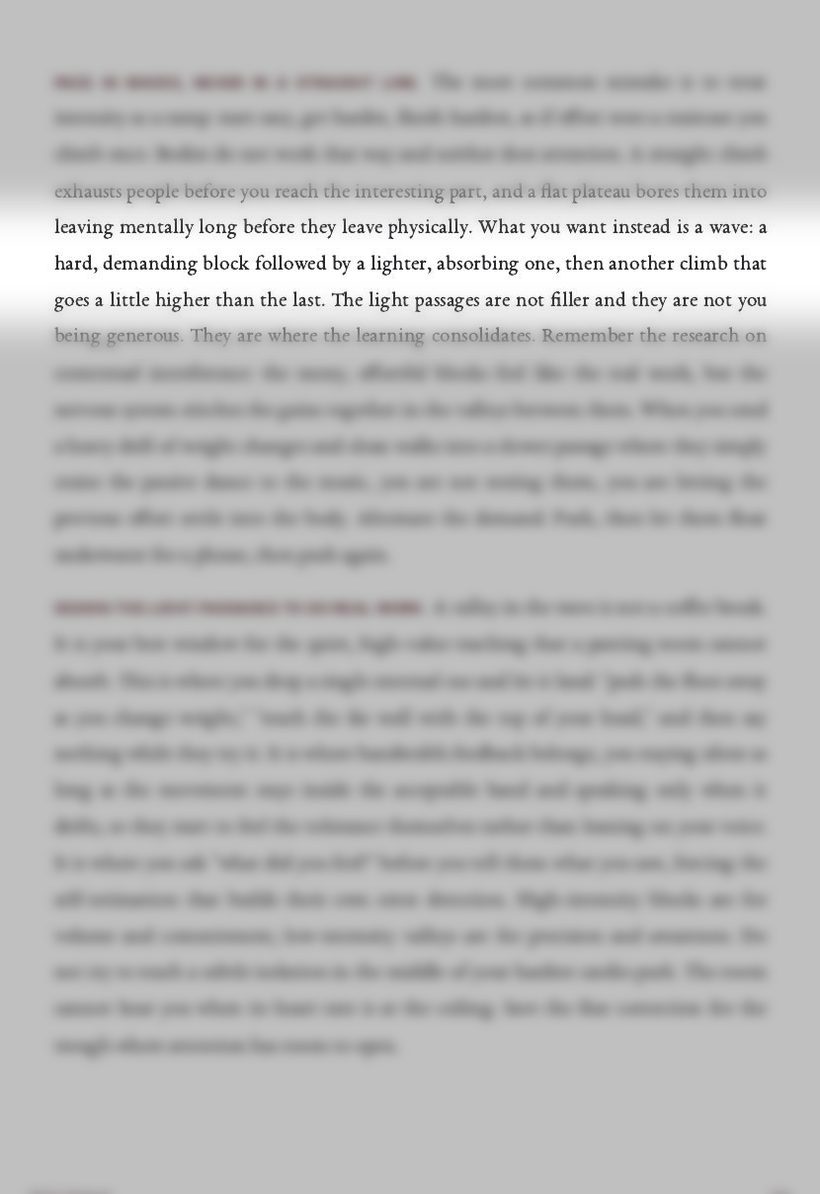
Structure the day in arcs, not a flat line. Alternate hard technical blocks with lighter social or creative ones so attention is spent and refilled across the hours. Return to the same key ideas in waves rather than pouring new material continuously, because the brain consolidates through revisiting.
Three things taught deeply beats ten things taught badly. And read fatigue honestly, a tired room learns nothing and pushing through only ingrains sloppiness.
On the final block, tie every piece into one whole application, then send them home with a short plan.
An intensive has its own physics: arcs, waves, and honest fatigue reading.
The bootcamp is not a long class, step by step
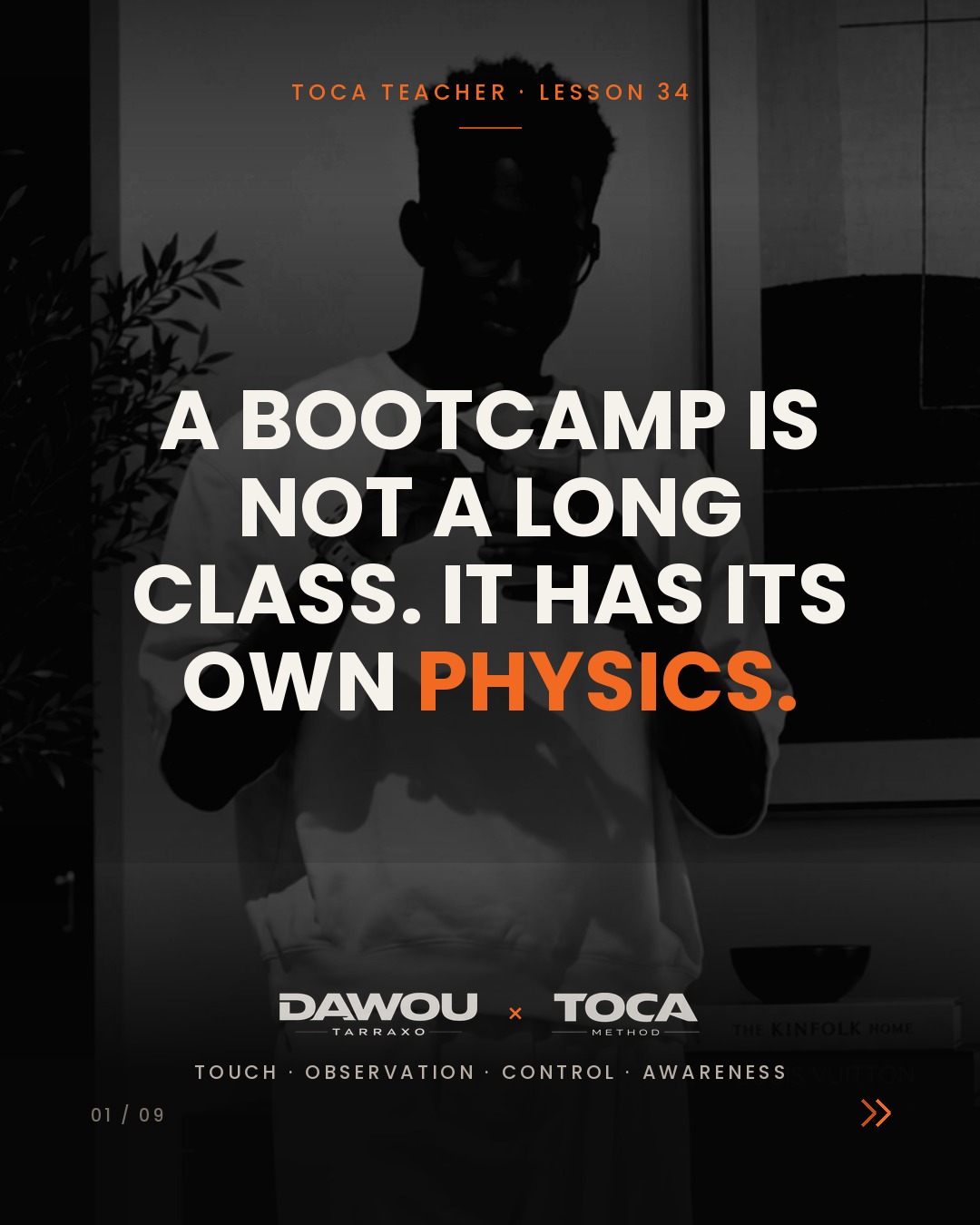
A BOOTCAMP IS NOT A LONG CLASS. IT HAS ITS OWN PHYSICS.
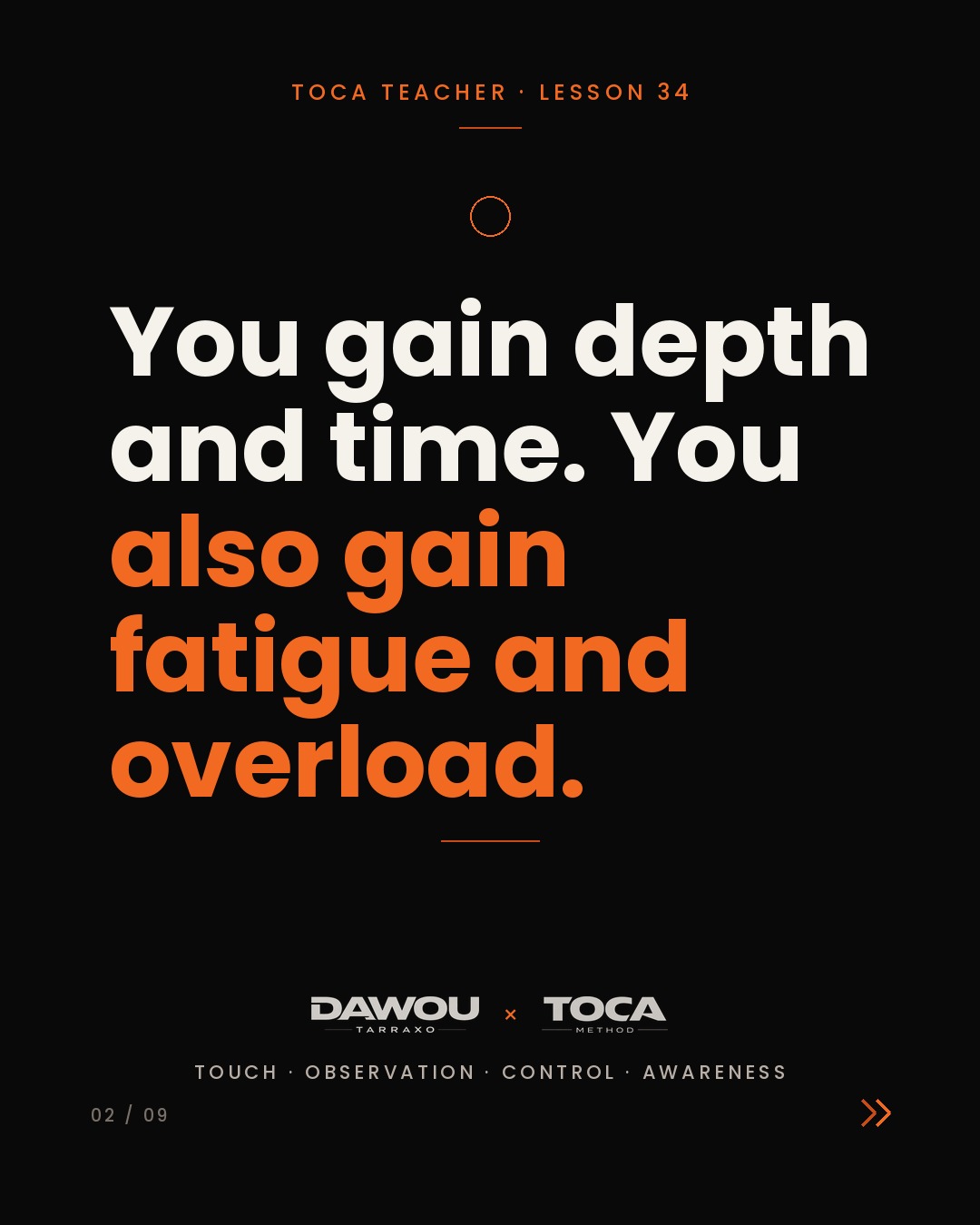
You gain depth and time. You also gain fatigue and overload.
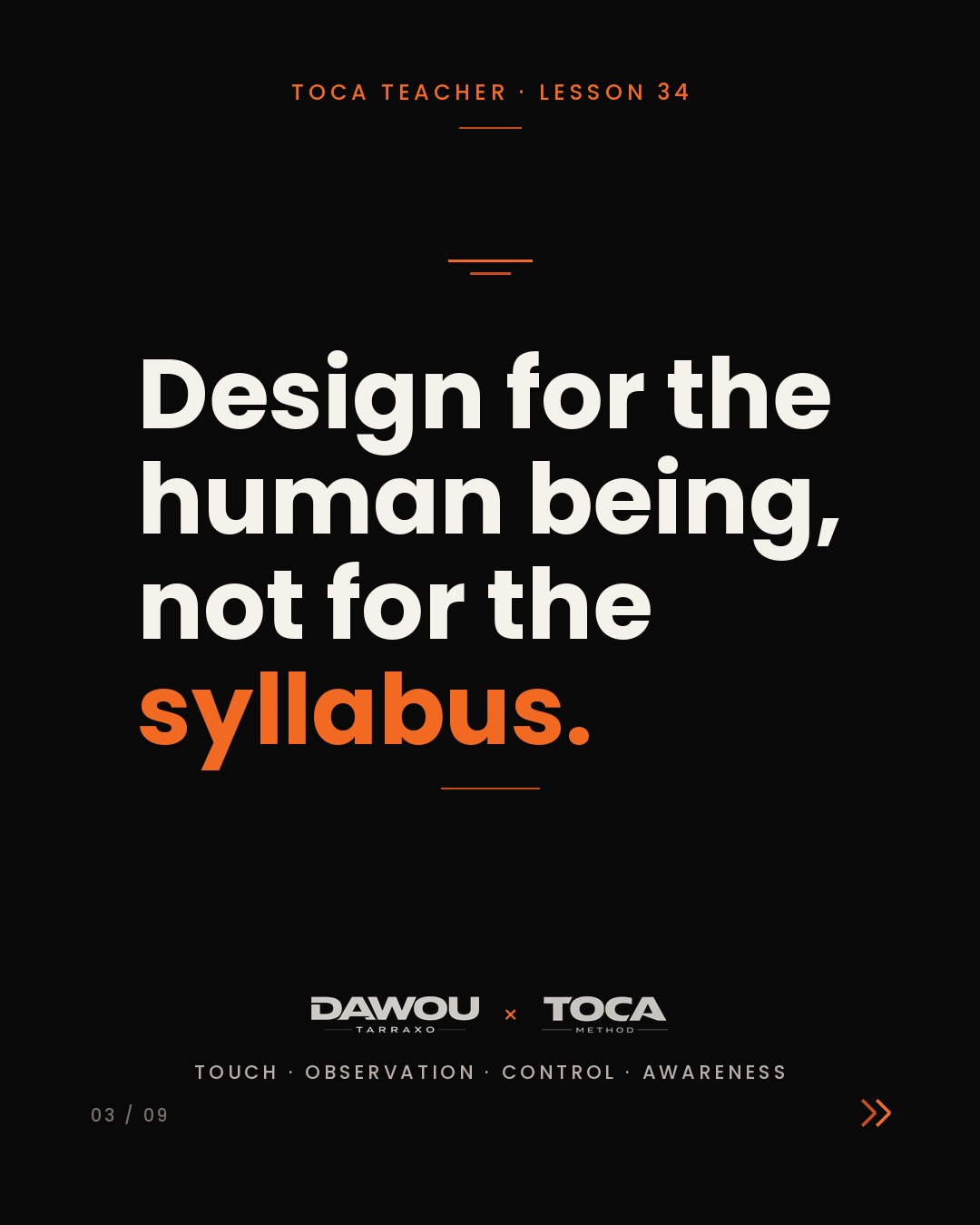
Design for the human being, not for the syllabus.
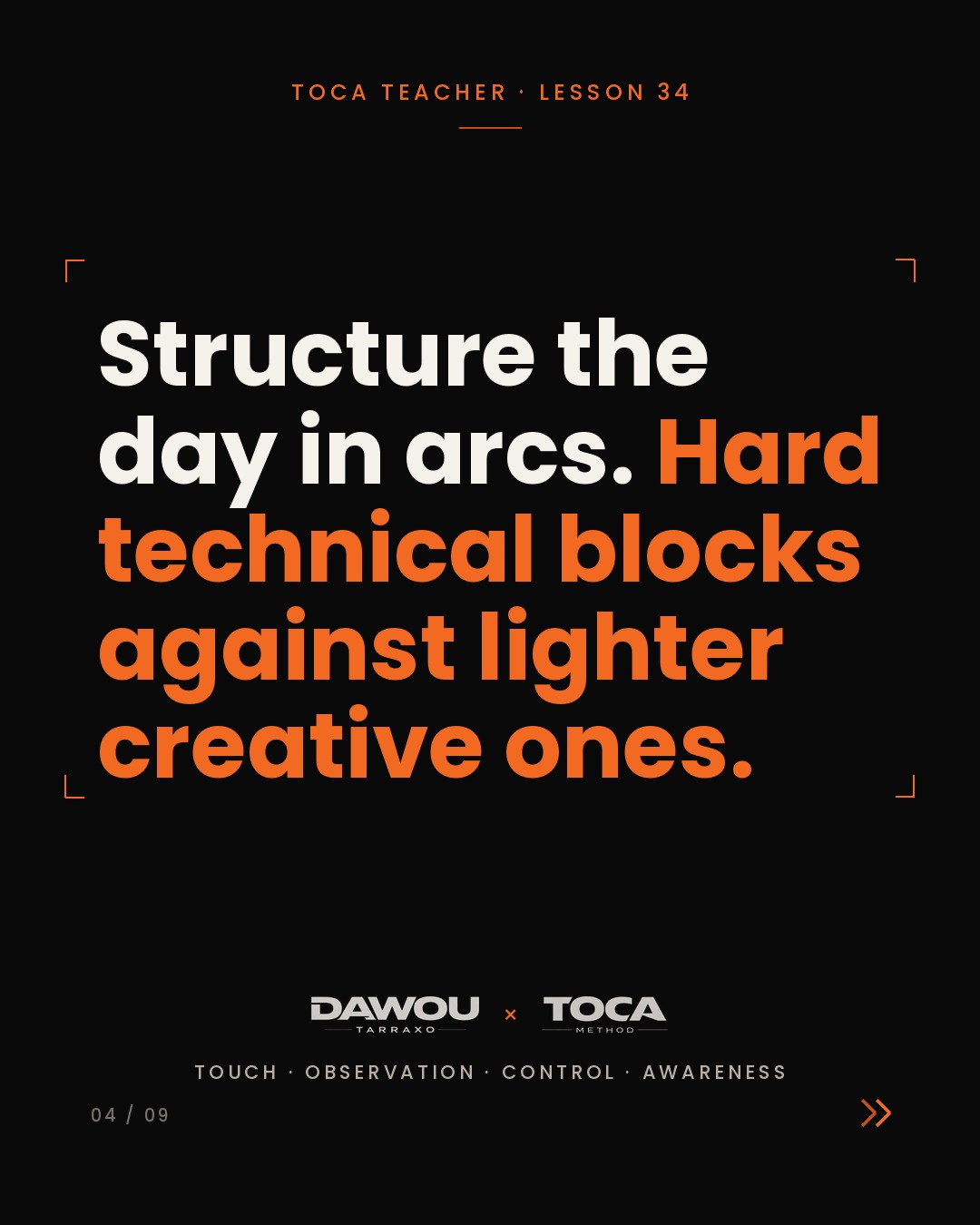
Structure the day in arcs. Hard technical blocks against lighter creative ones.
Return to the same key ideas in waves. The brain consolidates by revisiting.
Three things taught deeply beats ten things taught badly.
Read fatigue honestly. A tired room learns nothing and only ingrains sloppiness.
What will they still be practising three weeks later?
The full carousel
This lesson comes from the book
The teacher's guide · page 205
The student’s book takes dancers from the first foundations to real
feeling. The teacher’s guide gives instructors the structure to pass it on.
Both in English, French and Spanish, on Amazon and Apple Books.