How to dance a song you have never heard. Kizomba musicality explained
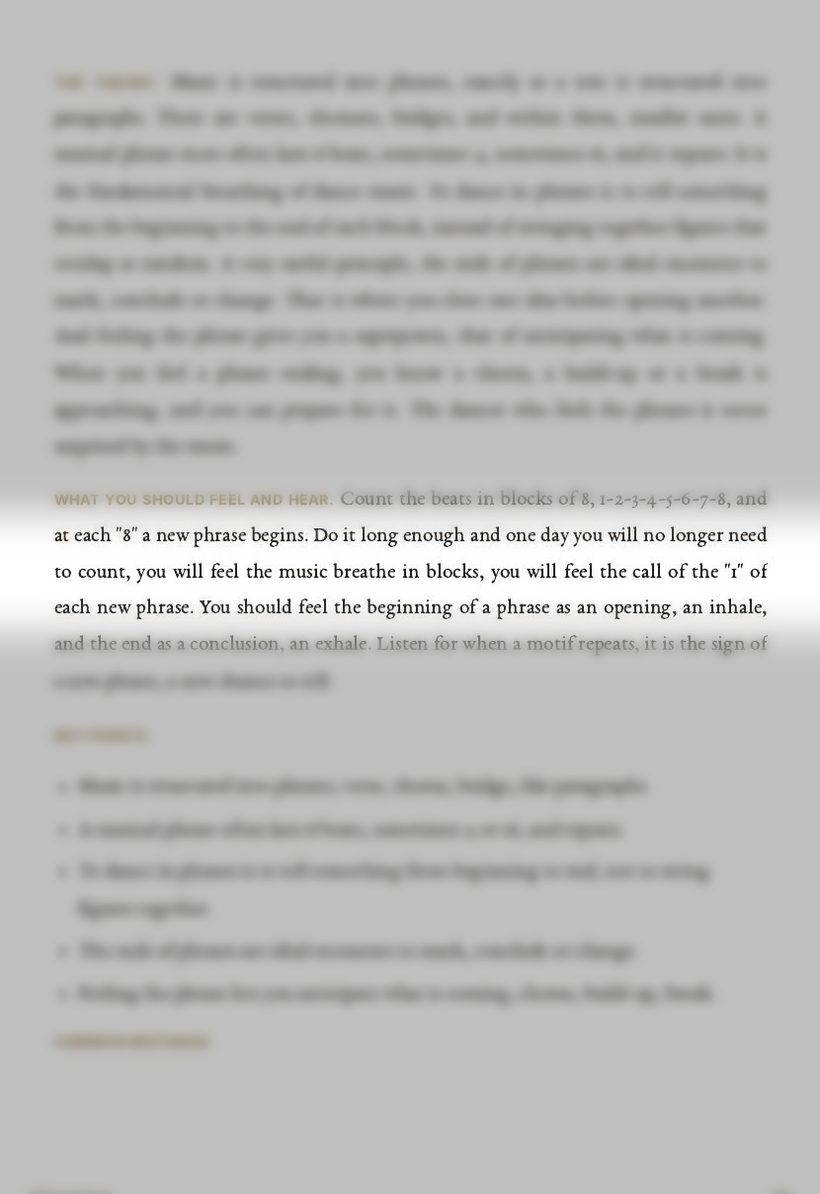
Music is built in phrases, usually blocks of eight beats that repeat. Count one to eight and you will feel the song breathe in blocks, even the first time you hear it.
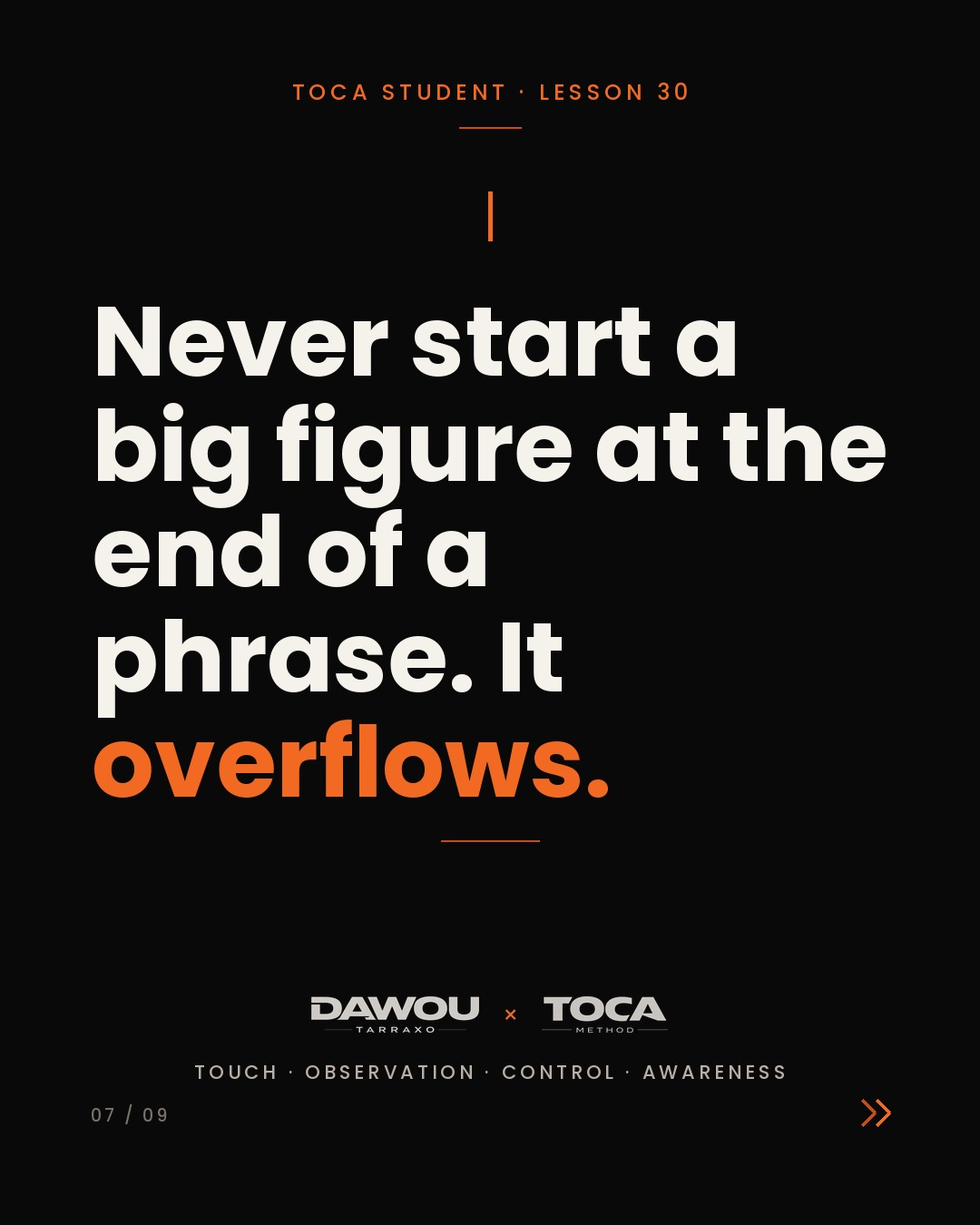
From there it becomes simple. Open an idea at the start of the phrase and close it at the end, because phrase endings are where you mark, where you conclude, where you change. Never start a big figure at the end of a phrase, it overflows.
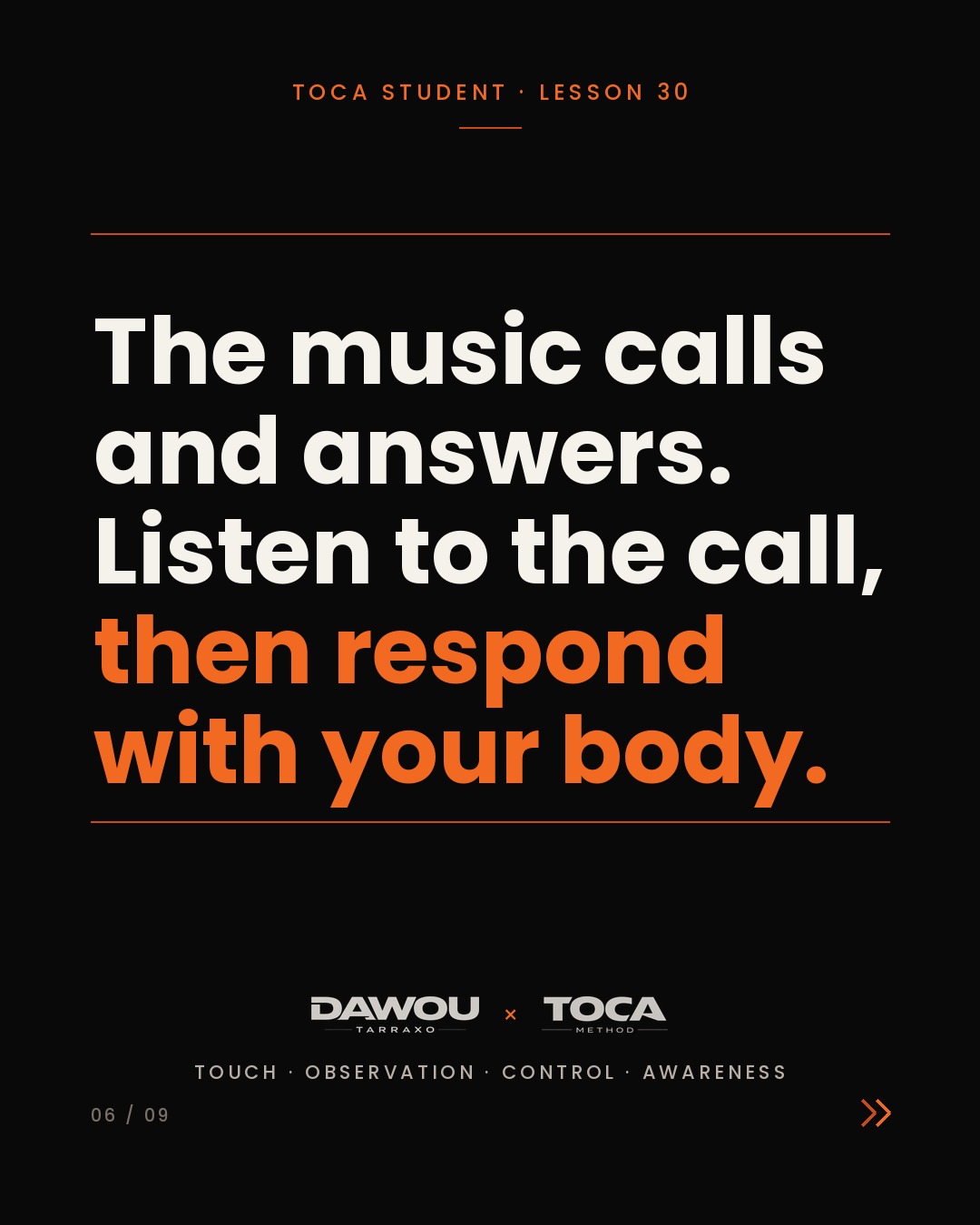
Then listen for the call and the answer. The music asks something, you reply with your body, after the question is finished and not over it.
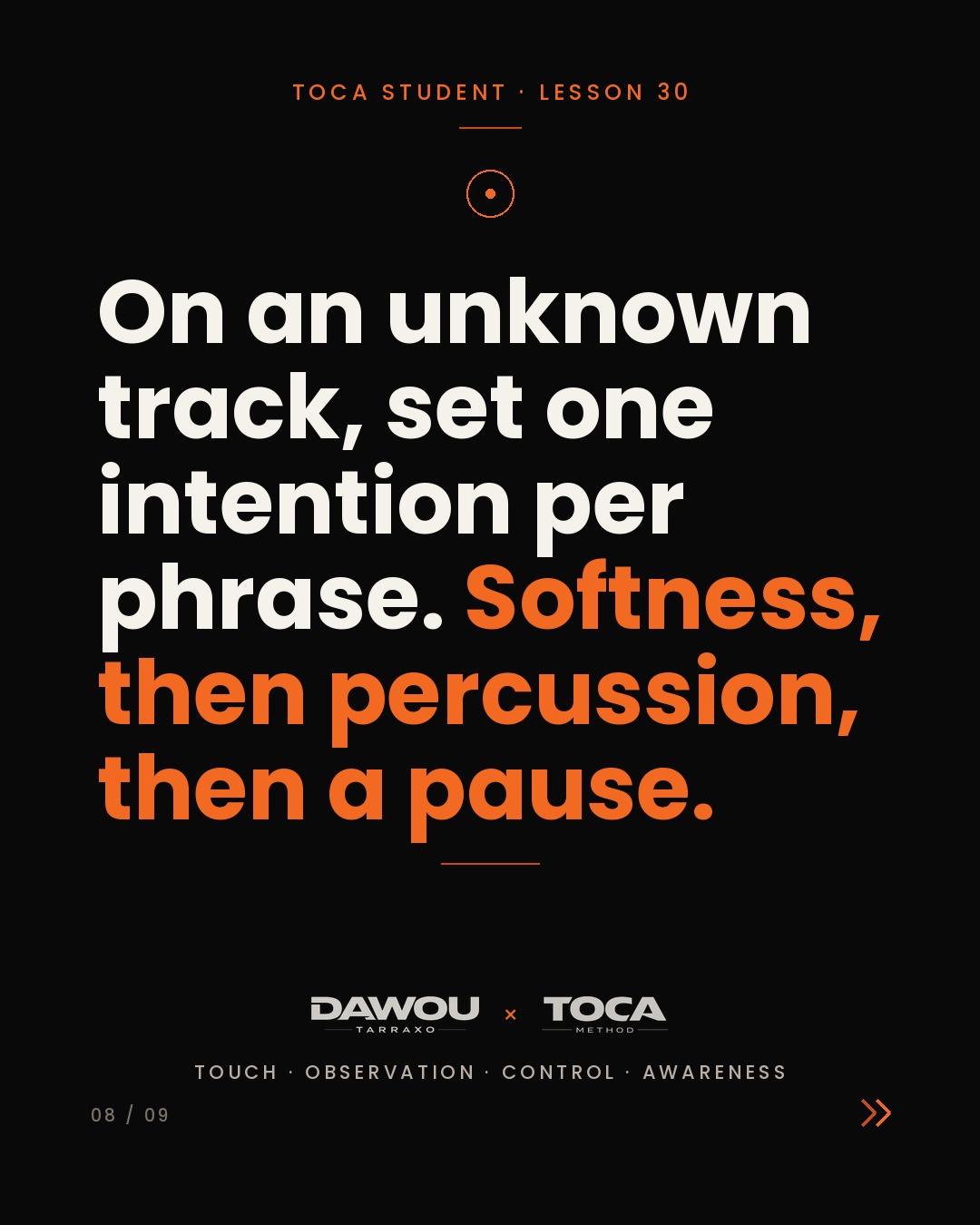
On the next unknown track, set one intention per phrase. Softness, then percussion, then a pause.
Phrasing is what lets you read any kizomba or tarraxo track on the spot.
Dancing a song you have never heard, step by step
YOU DO NOT NEED TO KNOW THE TRACK. YOU NEED TO HEAR ITS SHAPE.
Music is built in phrases, usually blocks of eight beats.
Count one to eight and you feel the song breathe in blocks.
Open an idea at the start of the phrase. Close it at the end.
Phrase endings are where you mark, where you conclude, where you change.
The music calls and answers. Listen to the call, then respond with your body.
Never start a big figure at the end of a phrase. It overflows.
Can you hear where the phrase ends?
The full carousel
This lesson comes from the book
The student's book · page 196
The student’s book takes dancers from the first foundations to real
feeling. The teacher’s guide gives instructors the structure to pass it on.
Both in English, French and Spanish, on Amazon and Apple Books.